Last Wish
A will that opens only when the record says so.
Parchment, ink, oxblood ledger heirloom
The problem
A will that opens only when the record says so.
Inheritance today depends on lawyers, executors, and operators who can stall, override, or release funds early. There is no trustless way to prove someone has died and pass on an estate without a human gatekeeper.
How it works
The mechanism
A testator funds an on-chain escrow and configures an obituary dossier: heir, evidence URL, query, and a minimum-confidence bar. A dead-man's-switch heartbeat proves the testator is alive; once silent past the dormancy period, anyone or a keeper triggers verification. Release requires both an N-of-M obituary majority consensus from a Parse-Website direct scrape AND an LLM inferNumber confidence score at or above the testator's bar, after which the heir alone can claim.
Agent pipeline
Who does what
Obituary Witness
Parse-Website agents scrape the fixed obituary page and vote; a 2-of-3 byte-identical majority confirms the verdict.
Confidence Assessor
LLM inferNumber scores how strongly the evidence supports death and must clear the testator's minConfidencePct bar.
Dead-man's Switch
heartbeat() resets dormancy; expiry of dormancyPeriod opens the estate to permissionless verification.
Executor
LLM inferToolsChat reviews evidence and runs the autonomous on-chain settlement to Confirmed.
Full pipeline ran Confirmed → Claimed — 0.3133 STT released to the heir (claim tx 0x7acd1549…). View LastWish on the Shannon explorer ↗
Screens
/dashboard
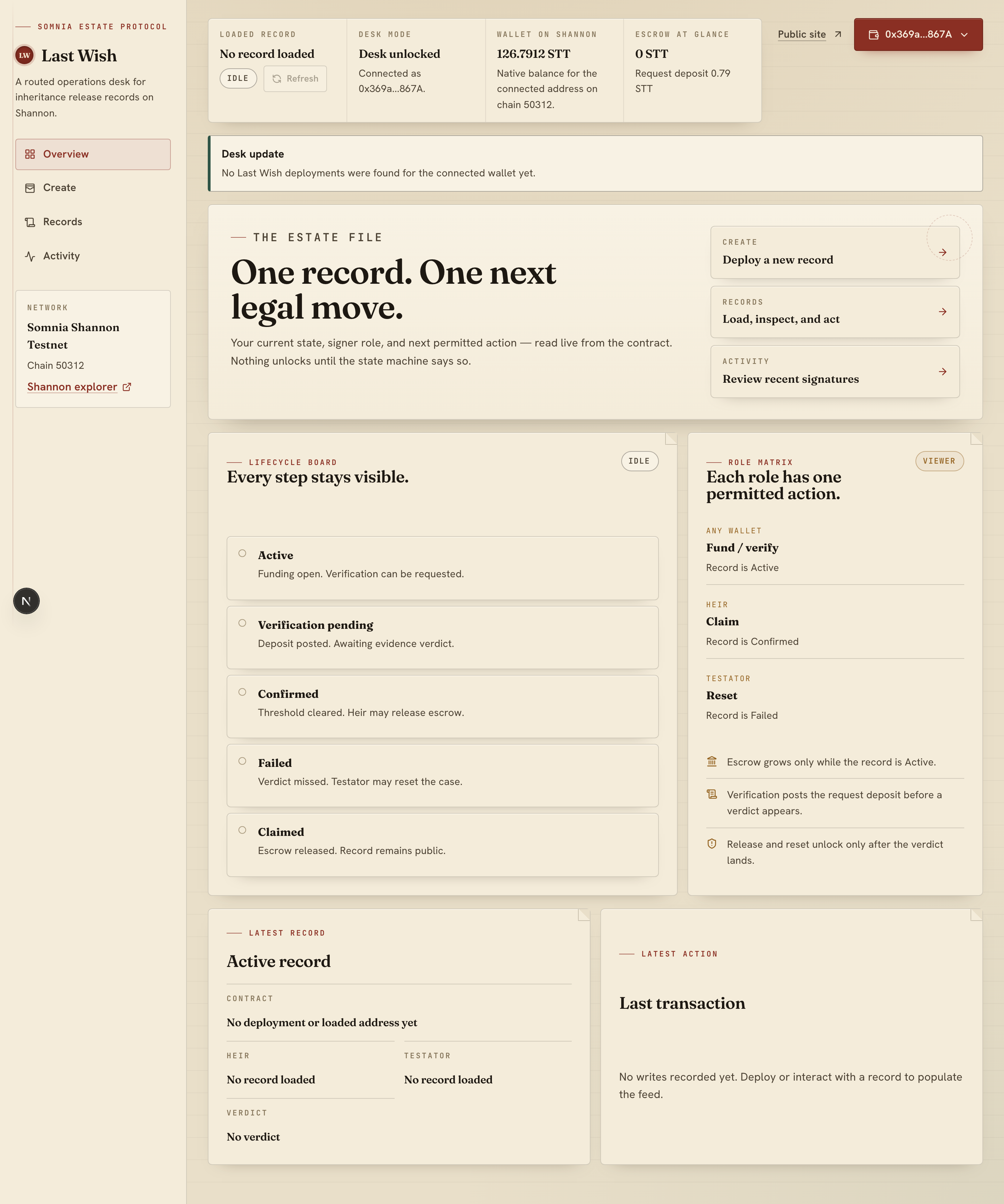
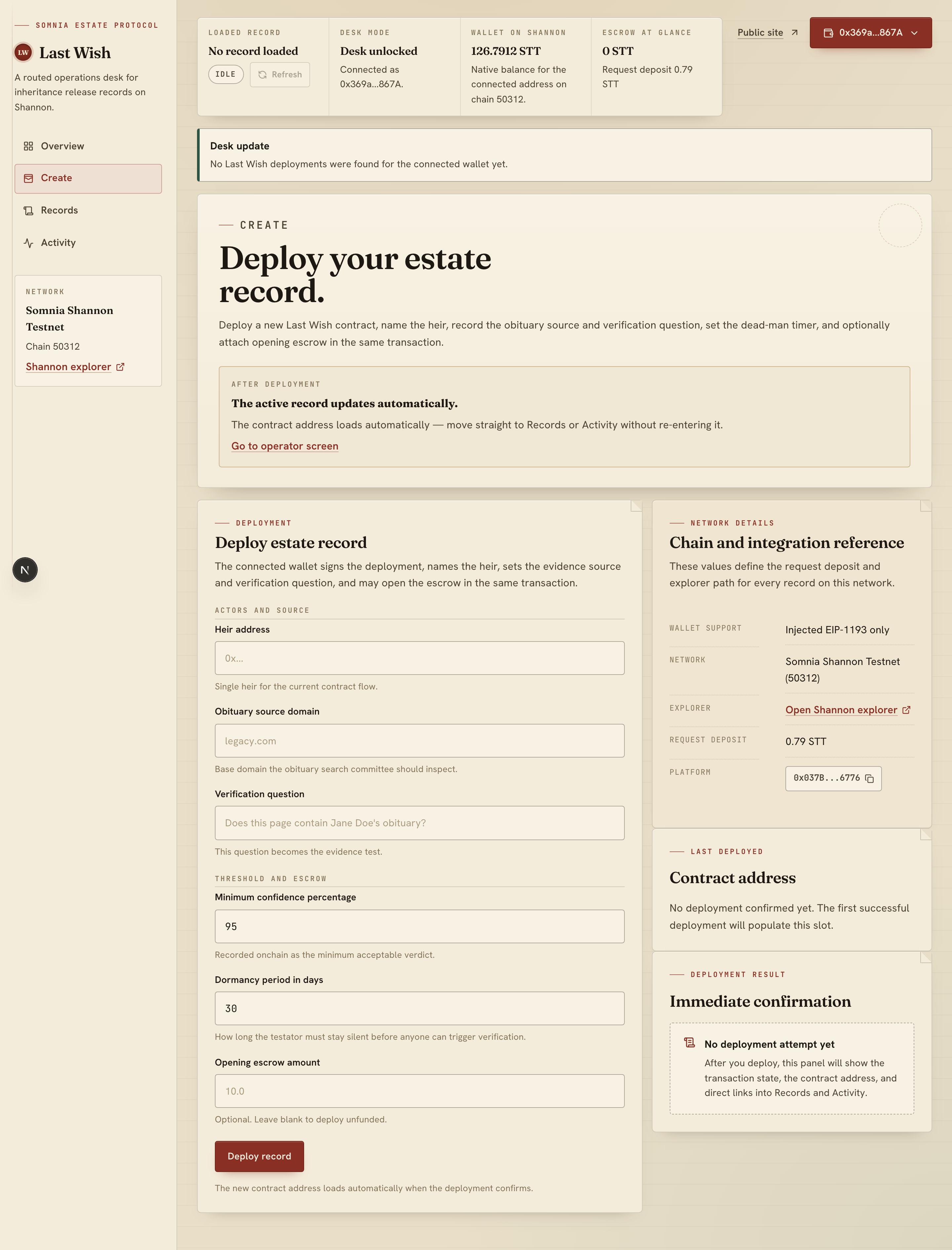
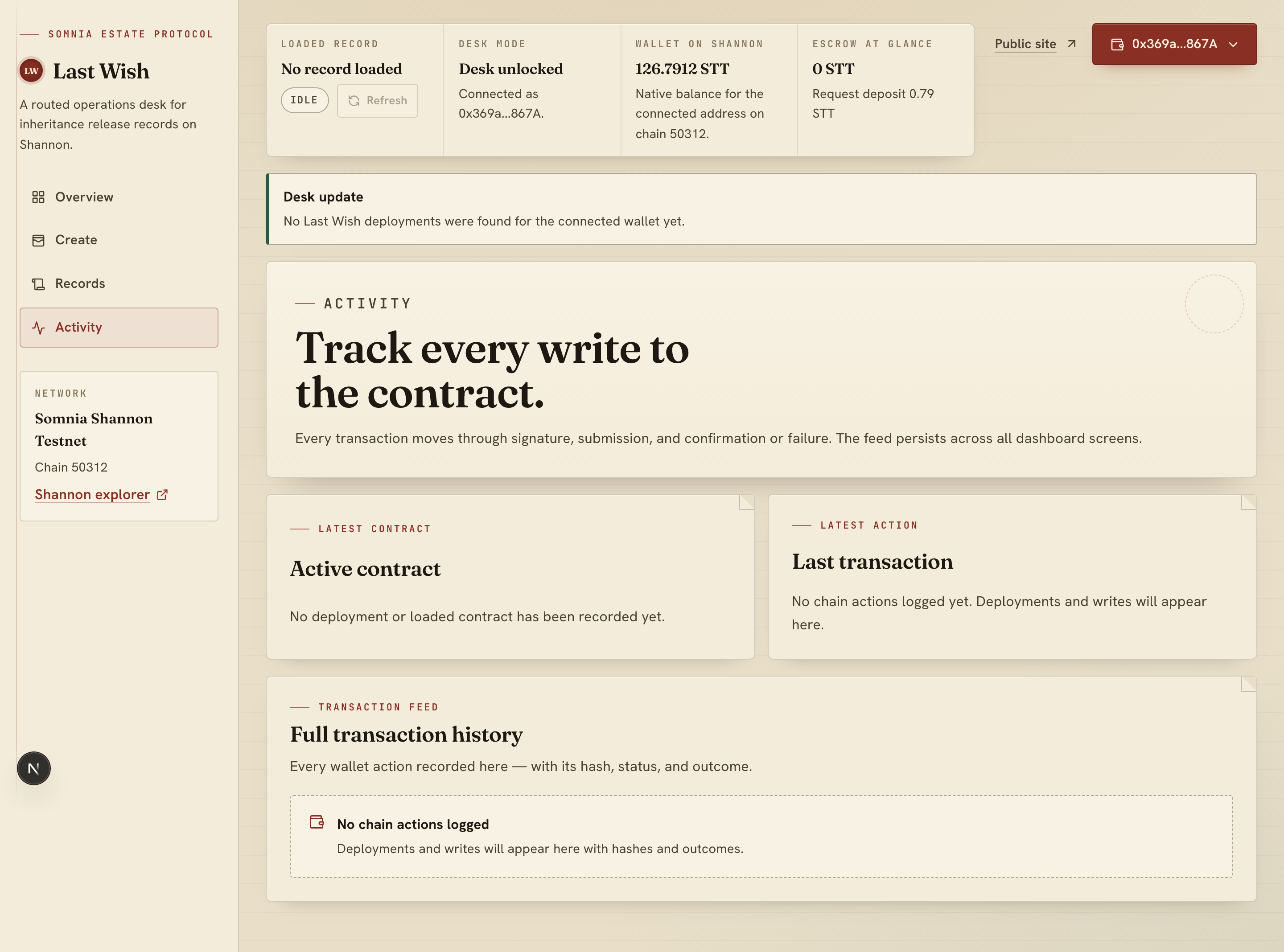
Estate case file with the lifecycle board (Active → Claimed), role matrix, dossier, status seals, and an activity timeline of on-chain writes.
Run it yourself